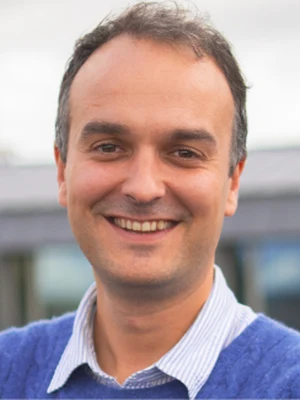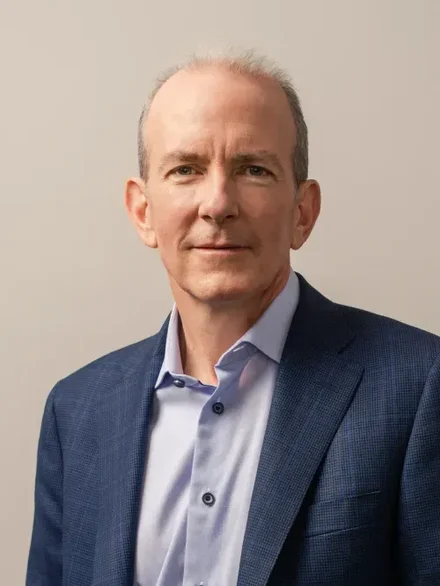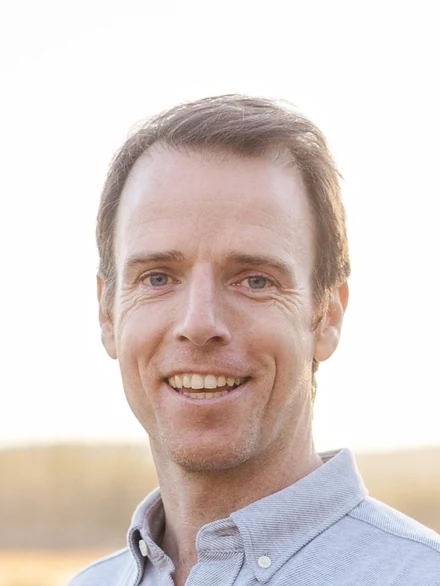
Darragh Buckley is the founder and chief executive of Increase, a company that lets software open bank accounts, send wires and ACH transfers, and issue cards by talking straight to the US banking system. He grew up in Limerick, Ireland, alongside Patrick and John Collison, and in 2010 he became the first employee of their payments startup, Stripe. He spent six years there building the team that made sure money from card sales landed in merchants' bank accounts, then left to build the banking technology he had wished Stripe could buy.
Growing Up in Limerick
Limerick was a small place when he was growing up there. By his own count the city had maybe 35,000 people, but it had a forward-looking university and a cluster of multinational companies, and he has said that combination gave local kids "a different window of what's possible." The Collison brothers were from the same town. All three ended up studying in the United States, and they spent more time together in Boston, Massachusetts, while Patrick and John were working out the idea that became Stripe.
Buckley earned engineering degrees from the University of Michigan and MIT, and he went to work at Lehman Brothers. That job made him the obvious candidate when the Collisons needed someone to deal with banks. He jokes about it now: Stripe assumed that someone who had worked at an investment bank must understand banking, and he says the honest answer was "sweet summer child, no."
Stripe's First Employee
He joined Stripe in 2010 as its first hire. The early team was John Collison, Patrick Collison, Greg Brockman, and him, which he compares to being dropped into a very high-powered group project. It quickly became clear that the job was "less banking and more engineering related to banking." He negotiated and built out Stripe's relationship with Wells Fargo, its first big bank partner, and went on to lead the team responsible for programmatic money movement, deposit account structures, and the controls around them.
One night from that period still sums up early Stripe for him. On a call with a partner, the team learned that the next slot to certify a direct connection to the card network was six weeks away. Someone asked whether anything was sooner, and the answer was 10 the next morning, offered on the assumption that nobody could be ready. Stripe took it. The team split roughly 150 test cases between them, one person starting from the top of the list and another from the bottom, and worked through the night. Around 8 AM Buckley ran out to the Fry's Electronics store in the South Bay as it opened to buy a part for the plain old telephone line the certification needed, then raced back to Palo Alto, California. By 11:30 the examiner told them he had never seen anyone pass so quickly, and Stripe ran its first live transactions.
He also likes to tell the story of the first office furniture run. Everyone carried flat-packed IKEA desks in from the car, and the Collisons put each box down and sprinted back for the next one. He remembers wondering whether they had parked illegally. They had not. It was simply how they moved, and once two people in a room are running, he says, everyone else starts running too.
The Stone in the Shoe
Years of building Stripe on top of other banks' systems left him with a list of small frustrations. When a wire to a merchant failed, the bank sent an email asking Stripe to repair it, so Stripe avoided paying merchants by wire at all. An ACH field called the trace ID did not pass through Wells Fargo's systems intact, which meant Stripe could not reliably match returned payments to the transfers they came from, and at one point a team of dozens of people did that matching by hand. Nobody at the bank had built anything badly. The systems were made for a different kind of customer.
"There was a stone in your shoe, and you were trying to explain to someone why the stone in your shoe was super annoying," he has said. The lesson he took from it was that when a product almost fits and a lot has been built on top of it, someone should go back and redo the foundations. He left Stripe in 2016 and began working toward that idea.
Founding Increase
Buckley started Increase in 2020. The company built its own banking core, the ledger of balances and transactions that every bank keeps, and connected it directly to the Federal Reserve's payment services (FedACH, Fedwire, Check 21 and FedNow) and to Visa for card issuing. He compares the move to what Stripe did in 2010, when it folded the merchant account and the payment gateway into a single company. Increase folds the bank's core and the API on top of it into one product.
The design choices follow from his Stripe years. Stripe hid the messy details of payments behind clean abstractions for developers. Increase does the opposite and labels every field exactly the way the payment network does, because its customers are payments companies that want every piece of data the network sends. Gusto runs on Increase, and Ramp uses it to pull money from payers and push it to payees for its bill pay product. He likes to say Ramp does not need him to explain ACH. Prospective customers often probe with technical questions, such as whether Increase passes through a wire's IMAD reference, and after three or four good answers, he says, "there's this sigh of relief and dropping of shoulders, which is just like, 'Oh, I'm with my people.'"
Increase is about half engineers. He wants compliance staff to wander into engineering and engineers to read the source documents for the rules they implement, so that requirements like the wire travel rule are built into the product from the first day. He treats a bank examination the way engineers treat a release: run the checks on yourself many times a day so the moment of relief when the data comes back clean shrinks toward nothing. Increase became profitable in 2025, and by late 2026 it was moving a little over half a trillion dollars a year with a team of about 33 people.
Buying a Bank in Washington State
For years Increase relied on partner banks, including Grasshopper Bank and First Internet Bank of Indiana, and Buckley spent much of that time learning how to own a bank himself. Banks cannot announce that they are for sale, because their loan officers would start leaving, so buyers and sellers meet through investment bankers and at a conference called Acquire or Be Acquired. In 2023 he got far into the approval process to buy Washington Business Bank. Regulators told him he seemed capable but new to the industry and encouraged him to serve on a bank board first. He joined the board of Washington Business Bank and says the view from the governance seat taught him how banks choose what to specialize in and what to walk away from.
In 2025 he bought a stake in Twin City Bank, a small community bank in Longview, Washington, large enough to need regulators' approval for control. The deal drew an odd campaign: someone, widely assumed to be a competitor, hired a public relations agency to pitch reporters negative stories about it and about him. The FDIC signed off and the deal closed anyway. At the time he defended community banks, saying "community banks' strength is their relationships and knowledge," and warned that sponsoring fintech partners takes specialized supervision. After more than a year spent putting the right controls in place, the bank was renamed Increase Bank in 2026.
Boring Technology and Uneventful Days
These days he is also testing his own rails on AI. His software agents have their own bank account and payment cards, so they can buy things on ordinary checkout pages, like flowers sent home to thank his wife for minding the kids while he travels, without waiting for him to approve each purchase. The control is simple: an agent can only spend what is in its account, and when it runs through its $100, it asks him for more.
His favorite engineering idea is to use boring technology widely, because every clever special-purpose tool adds something the team must understand and maintain for years. Hard puzzles, he says, belong in the Sunday crossword. He applies the same thinking to banking. "If your friend is an air traffic controller, and they show up to meet you for coffee, and they're saying, 'I've had the most exciting day at work,'" he has said, you would be alarmed.
It is a telling wish from someone whose career began with an all-night scramble to get Stripe certified on the card network, and who then spent years watching colleagues match returned payments by hand because one field in an ACH file did not come through. The engineer from a city of 35,000 in Ireland now owns a community bank in Longview, Washington, and the thing he wants from it is the one banking never gave Stripe: nothing to report. You want your banker, he says, "to, in fact, enjoy uneventful days."