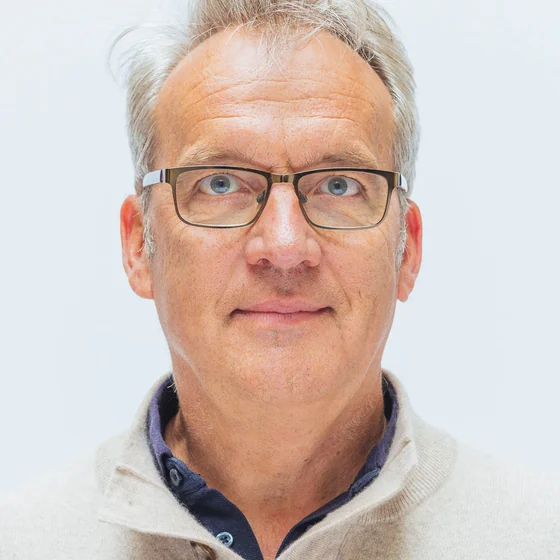
Michael Mueller is founder and executive chair of Form3, the London, England, cloud payments company. He left school in western Germany for a banking apprenticeship in 1988, spent more than 25 years inside big banks, and quit in 2016 to build the payment system he had wanted as a customer.
An Apprentice at Deutsche Bank
As a child he wanted to be an architect. Instead he went straight from school into an apprenticeship at Deutsche Bank, where he learned how transactions, customers and the bank's own machinery worked. He found his interest in payments helping build its international cash management business, and over nearly two decades the bank sent him to Frankfurt, Singapore, Sydney, Abu Dhabi and London. It also paid for an executive MBA at INSEAD, where he added a diploma in clinical and organisational psychology.
The 2008 Afternoons
During the 2008 financial crisis he was responsible for payments between banks and with funds. As liquidity dried up, senior managers and risk teams spent every afternoon with technologists deciding which payments could go out before the daily cut-off.
Barclays and the Change Budget
After a spell at the Royal Bank of Scotland, he became global head of cash management at Barclays and sat on its corporate banking executive committee. The bank had a "change the bank" budget for technology, yet year after year it went on regulatory mandates and keeping old systems alive. "As a former banker I was a customer of many of the legacy providers of payment technology, and often a very frustrated one," he has said.
Founding Form3
In the summer of 2016 he founded Form3 in King's Cross, London, with colleagues including Mike Walters, to run banks' payment back offices as a real-time cloud service. The platform went live about a year later, processing its first UK real-time payment for Ebury. Barclays invested in 2017. In October 2023 he handed the chief executive role to Walters and became executive chair, focused on governance, investors and strategy. Form3 has since set up its own apprenticeship scheme.
He started out as an apprentice learning how a bank moves money. He ended up rebuilding that machinery, and now his company takes on apprentices of its own.